Louis Braddock Clarke

TU Science Centre commissions a new work exploring the cinematic potential of mining algorithms
As Gems in Metal
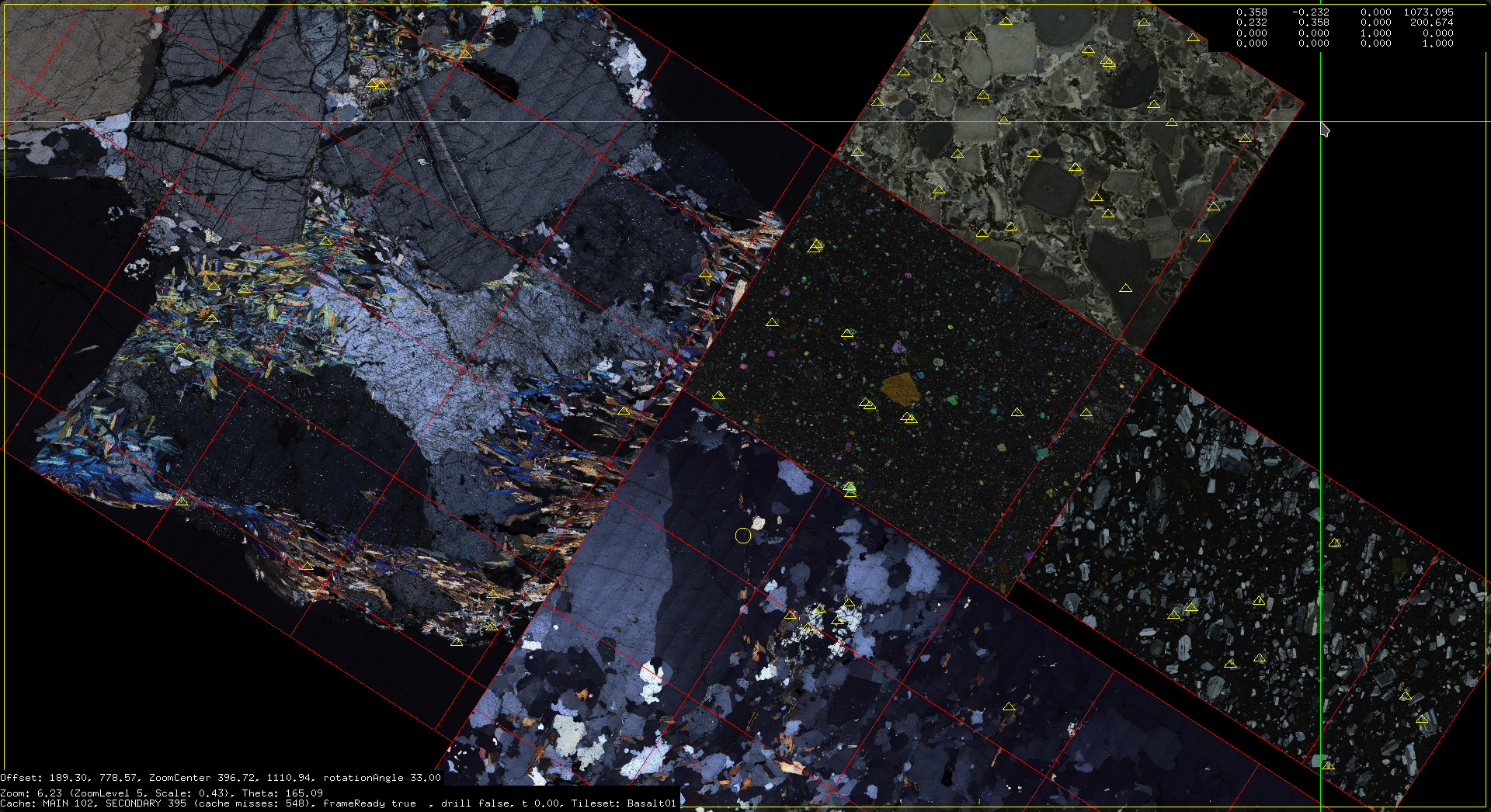
As Gems in Metal investigates the search for rare earth elements through machine learning and geological slices. The project utilises mining and drilling algorithms to combine the visual language of film with the temporal and material languages of the Earth. The work uses Mining Industry Machine Learning (MIML) algorithms to direct a camera that performs and analyses geological scans. Two algorithms operate in parallel: one replicates industrial techniques for ore detection, while the other searches for anomalies, patterns, and forms that defy quantification. This dual approach transforms micro-geological investigation into a broader meditation on the act of searching itself, whether for capital gain or self-reflection.
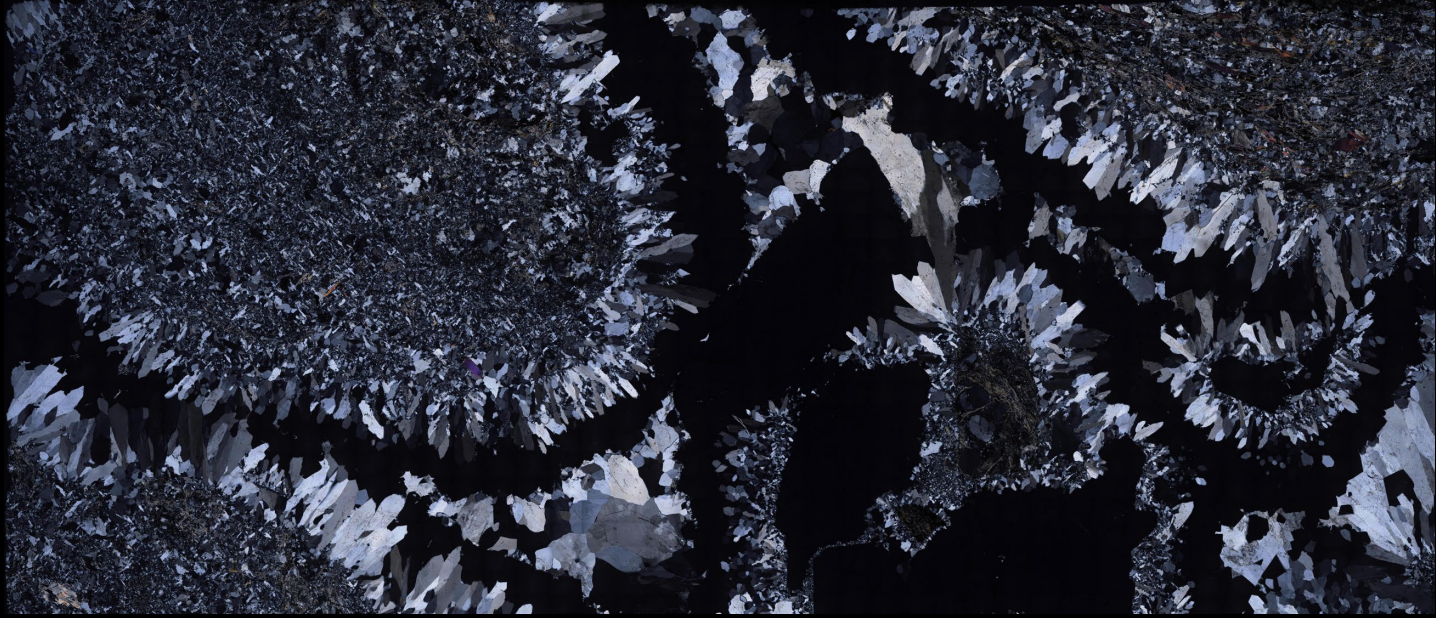
AGM draws on the archives of TU Delft in Naturalis Leiden, which holds one of Europe’s largest collections of geological thin sections. A thin section is an extremely fine slice of rock or mineral, approximately 30 micrometres thick, mounted on glass and examined under a petrographic microscope to reveal its minerals, textures, and geological history.
Context
In the current global race for Rare Earth Elements (REEs), scientific institutions, mining corporations, and governmental agencies are developing and prototyping new technologies to accelerate extraction. The demand for metals essential to computational infrastructures drives these efforts. Increasingly, algorithms are replacing traditional human prospecting methods, learning from crystalline imagery and mineral datasets to identify potential deposits. For As Gems in Metal, Louis developed a prototype algorithm in collaboration with Arron Lyon, initially designed for REE exploration. Instead of being limited to industrial applications, the algorithm is taught to search for “rarities” within mining samples. Using segmentation techniques, it isolates visual anomalies in crystalline structures and begins to “hallucinate” patterns.
As Gems in Metal was made possible through an intricate network of collaborations across scientific disciplines and institutions. The algorithm at the heart of the project was co-developed with the Science Centre and Faculty of Engineering and Geosciences at TU Delft under the guidance of Teun Verkerk and Michael van der Meer. Throughout the process, Feven Destra and Tobias Schmiedel collaborated closely on the project, focusing on scanning and prospecting thin sections. Together with the Earth Simulation Lab at Utrecht University, led by Karin Oostdijk and Jan van Tongeren, geological material samples were analysed through advanced powderisation processes to reveal Rare Earth Elements. Parallel to this, Rob van den Berg, Michael van der Meer, and Teun Verkerk at TU Delft, together with the Naturalis Biodiversity Center in Leiden, facilitated access to and usability of one of Europe’s largest archives of geological thin sections, comprising more than 230,000 specimens. The sound component of the work emerged from close collaborations as well. Joeri Brackenhoff, from the Acoustics Department of the Faculty of Geosciences at TU Delft, developed the sound algorithms using seismic reflection equations.
As Gems in Metal is now part of the permanent art installation at the TU Delft Science Centre.
Profile
Louis Braddock Clarke
Louis Braddock Clarke is an artist and researcher entangling notions from geology, deep-time cinema, and esoteric philosophy. Listening and amplification as methods have become key approaches to their work relating to disrupted ecologies. Through field work, film-making, sonic tuning, and divinating geologies their projects seek to speculate on the future surfaces of the Earth.
Louis Braddock Clarke’s works have been shown internationally at major galleries and festivals including: Rencontres Paris/Berlin, SeeyouSound, Venice Biennale Musica, Sonic Acts, Rewire, NTMoFA, Noorderlicht Biennale, Kunstervien Arnsberg, Sounds of Silence, Netherlands Film Festival, FILE Brazil, Digital Arts Taipei, Macau Design Museum, MU Hybrid Art House, W139, OT301, Loods6, Casino Luxembourg, Quartair, Stroom, SHAPE+, Recontemporary, CRAG Gallery, Museum of Mines and Metal Brazil, WEST Museum, Het Hem, and reviewed by magazines such as the WIRE, CLOT, DAMN, AQNB, Metropolis M. The works are award-winning, receiving the Waag Technology Award 2019, Dutch Talent Award 2020, Landscape Research Award 2021, Gouden Kalf 2022, NFF Digital Culture 2023, and ARS Electronica Digital Music 2025.